B2B Collections Strategy: A Modern Playbook for AR Teams
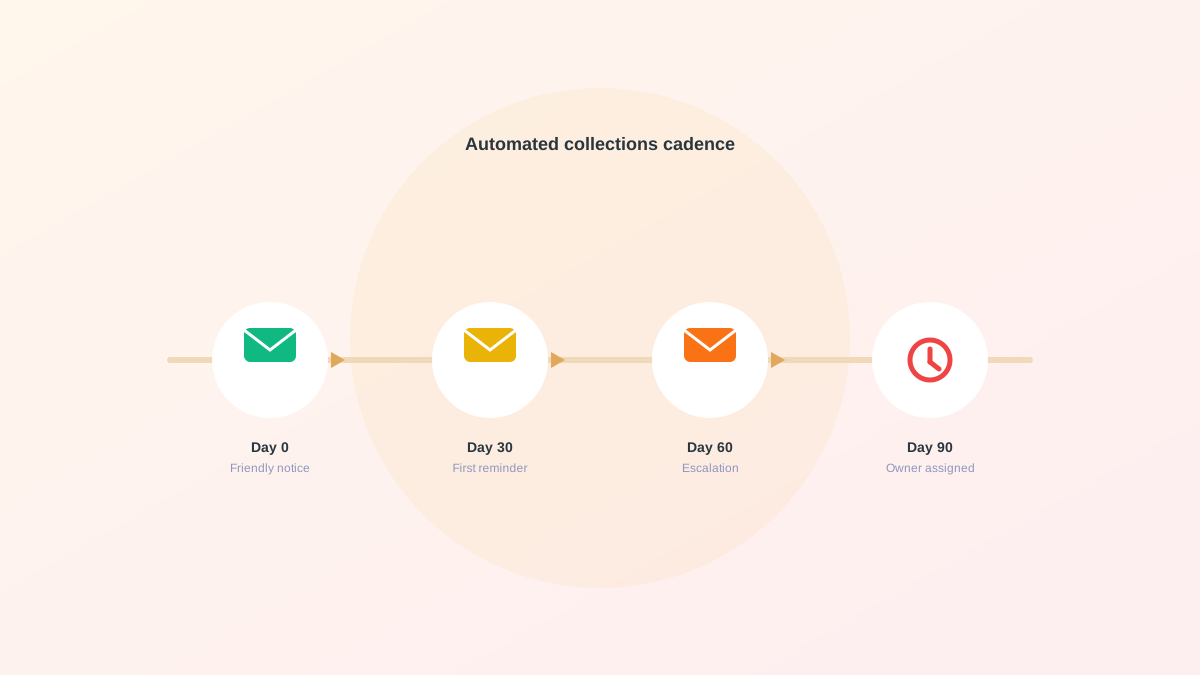
Collections is where good receivables data turns into actual cash, and it is where many teams quietly lose money. The usual failure mode has little to do with effort. It comes from stale aging data, unclear ownership, and a one-size-fits-all dunning template that annoys good customers while ignoring risky ones. A modern collections strategy is lightweight, tied to live data, and automatable. This playbook lays out a cadence that finance teams actually run, explains why each step works, and shows how automation keeps the cadence consistent without adding headcount.
Why most collections processes underperform
Two problems dominate. First, the aging data is old, so collectors chase invoices that were already paid and miss accounts that only just slipped past due. Wasting effort on phantom debt erodes both productivity and credibility with customers who already paid. Second, ownership is fuzzy, so overdue invoices fall between people and age while everyone assumes someone else is handling them.
A PDF statement emailed once a month fixes neither problem. The data is a snapshot the moment it is sent, and a statement is a document rather than an assignment. Collections improves when it becomes a workflow driven by current data with a clear owner attached to every overdue balance.
Build the cadence around aging buckets
Start simple. Automate reminders for the standard aging buckets and escalate the tone and the channel as invoices age. Most of the value comes from consistency. A reminder that always goes out on day 30 collects more over a year than an occasional heroic phone call that happens on day 75 when someone finally notices.
The escalation should feel proportional. Early reminders stay friendly and assume good faith, because most late payments are administrative rather than deliberate. Later steps get firmer and more direct, and the final step pulls in a named owner for a real conversation.
- Day 0: friendly confirmation that the invoice was received
- Day 30: first reminder, neutral and clear
- Day 60: escalation with a direct ask and a named contact
- Day 90: assign an owner and consider holds or a terms review
Tie every overdue invoice to an owner
Ownership is the difference between a cadence that works and one that stalls. Assign accounts or aging buckets to specific people so there is always a name attached to a problem. Automation can route the assignment and send the reminders, and a human still owns the relationship and the judgment calls that come with it.
Clear ownership also makes performance visible. When each collector owns a defined set of accounts, you can see who is collecting effectively and where an account needs help, which turns collections from a shared scramble into a managed function.
Segment by risk, not only by age
Age alone is a blunt instrument. A strategic customer who is two days late needs a gentle nudge, while a chronically slow payer who is two days late may need a firmer process and a credit review. Treating both identically either annoys a good customer or under-reacts to a risky one.
Align your approach with current customer risk. Layer payment history, credit exposure, and relationship value on top of the aging bucket so the cadence adapts to who the customer is, not only how late the invoice is. This protects your best relationships while still protecting cash from the accounts that warrant attention.
Handle disputes separately
Disputed invoices are not the same as slow payments, and mixing them corrupts both your metrics and your customer relationships. A customer withholding payment over a damaged shipment should not receive escalating dunning notices as though they simply forgot to pay. That treatment turns a solvable dispute into a damaged relationship.
Flag disputes as soon as they appear, route them to the right owner to resolve, and keep them out of the standard reminder cadence until the underlying issue is settled. Clean separation keeps your aging honest and your collections focused on genuine slow payment.
Measure and automate
Track collection effectiveness, average days delinquent, and the share of receivables in each bucket every month. Watching the trend catches a slipping bucket before it ages into a write-off. Companies that automate the collections cadence routinely cut a week or more off DSO without adding headcount, because consistency beats heroics over the long run.
Alderstone's Nudge supports this directly. It assigns buckets by customer, surfaces the next best action rather than only a statement, and ties the whole cadence to live aging from your ERP. Start with reminders for the 30, 60, and 90 day buckets, then layer dispute workflows once your cash application match rates make the aging reliable.