Month-End Close: Speeding Up Reconciliation and Cash Application
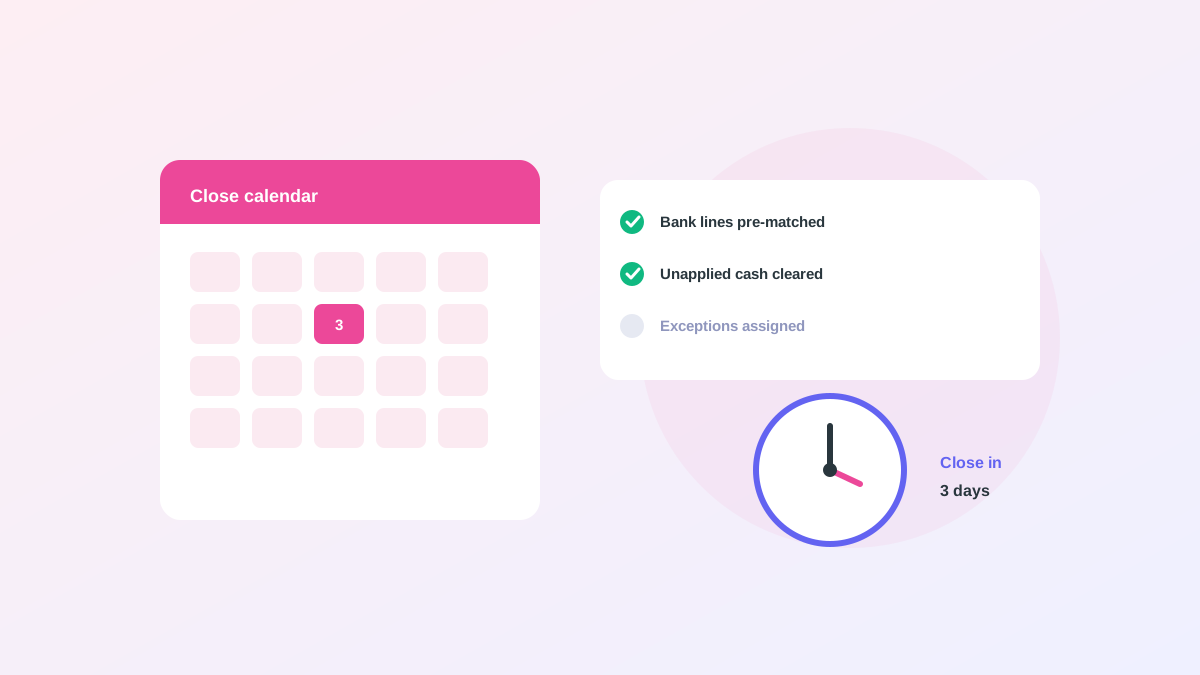
Ask any controller where the month-end close hurts most and unapplied cash will be near the top of the list. Payments that have arrived but are not yet matched to invoices leave receivables overstated and force a manual reconciliation pass at exactly the moment the calendar is tightest. Speeding up cash application is one of the highest-leverage things a finance team can do to shorten the close. This guide explains why unapplied cash blocks the close, how continuous matching prevents the backlog, and how to build cash application into the close checklist so the calendar stops slipping.
Why unapplied cash blocks the close
At close, every open invoice and every unapplied payment is a question that has to be answered before the books can be trusted. Unapplied cash is the most frustrating kind of question because the money is already in the bank. It simply has not been connected to the right invoice yet, so the ledger shows a receivable that is really already paid.
Until that cash is applied, accounts receivable is overstated and DSO is distorted. Clearing the backlog manually in the first days of the close is high-pressure, error-prone work, and it is a major reason closes run past the third business day.
Pre-match before the close even starts
The fix is to apply cash continuously through the month rather than in a rush at close. Automated matching pairs bank lines to open receivables as payments arrive, so by the time the close calendar begins, most cash is already applied and only genuine exceptions remain.
This changes the character of the close. The reconciliation marathon becomes a short exception-clearing exercise, because the routine matches were handled days or weeks earlier as the payments came in. The team starts the close from a position of near-completeness rather than a full inbox.
A close checklist that integrates automation
Build cash application into the close checklist explicitly so it is a managed step rather than a separate scramble. The checklist makes the dependencies visible and gives each item an owner and a deadline relative to the close calendar.
When these items are routine and mostly automated, the close runs on schedule. When they are left to manual effort, they become the bottleneck that everything else waits on.
- Confirm bank lines are imported and pre-matched
- Clear unapplied cash down to genuine exceptions
- Export an exception report for anything still open
- Assign owners to exceptions before close day three
The downstream benefits
A faster cash-application pass does more than shorten the close. It produces cleaner receivables data all month long, which makes collections decisions sharper and DSO reporting honest. The benefit compounds, because accurate aging makes every other AR decision better.
Controllers feel the return on automation most acutely here. Slow, manual cash application is what turns the close into late nights, so removing it improves both the numbers and the working lives of the team that produces them.
Building toward a continuous close
Pre-matched cash is a step toward the continuous close that many finance teams are working toward, where reconciliation happens throughout the period instead of in a concentrated push at month-end. You do not have to reach a fully continuous close to benefit. Each step that moves work earlier in the month flattens the spike at close.
Cash application is one of the best places to start because it has a clear trigger, the arriving payment, and a clear success measure, the share of cash applied before close day one. Get that step continuous and the rest of the close gets noticeably calmer.
How Nudge shortens the window
Alderstone's Nudge pre-matches bank lines to open receivables throughout the month and routes exceptions to a queue with owners attached, so the close begins with most cash already applied. Your ERP stays authoritative for balances while Nudge removes the manual reconciliation pass that pushes the calendar past day three.
The result is a close that is shorter, calmer, and easier to trust, because the receivables data the close depends on was kept current all month rather than reconstructed under deadline pressure.