Straight-Through Order Processing: How High Can Your Touchless Rate Go?
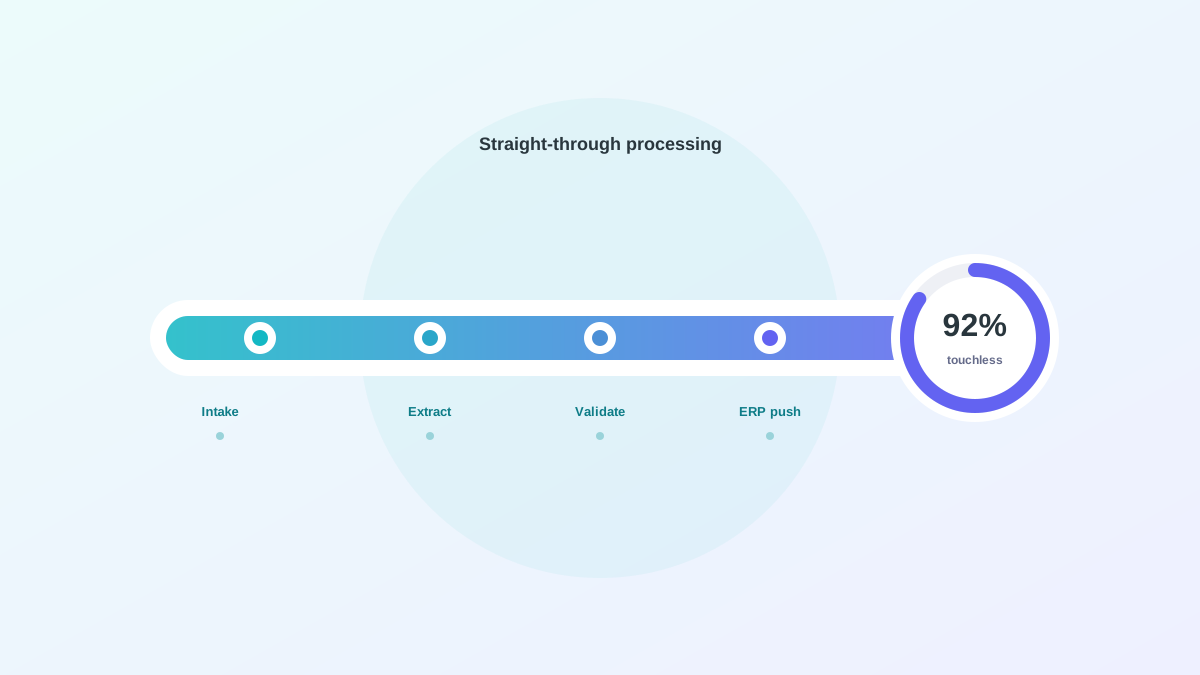
Straight-through processing, usually shortened to STP, is the share of transactions that flow from intake to system of record without a human touching them. In order-to-cash it is the cleanest single measure of how much of the routine work you have genuinely automated. The instinct is to chase 100 percent, and that target is a trap. The right goal is more nuanced. This article explains what STP means in practice, what benchmarks to expect, what drives the rate up or down, and how to push it higher without sacrificing accuracy.
What straight-through processing means in O2C
An order processed straight through arrives, gets classified and extracted, passes validation, and creates an ERP record without anyone keying or correcting it. The same idea applies to cash. A payment that matches an invoice and posts without manual intervention is straight through. STP measures the proportion of transactions that complete this way.
STP is valuable because it represents work you no longer pay for in time or errors. Every percentage point of STP is volume your team absorbs without effort, which is what lets a business grow order volume without growing the order-entry team in lockstep.
The benchmarks
For cash application, manual processes match 60 to 75 percent of payments cleanly, while AI-powered automation reaches 85 to 95 percent. Top performers in the 2026 benchmark exceed 90 percent touchless, with average days delinquent near six days. Order intake follows a similar curve as extraction confidence and validation rules mature.
Read STP by segment and document type rather than as one blended number. Structured ACH with clean remittance reaches very high rates. Messy scanned checks lag well behind. Reporting the breakdown tells you exactly where the remaining manual work lives, so you know which segment to improve next.
What drives the rate
STP is the product of four things working together: clean inbound data, accurate extraction, well-tuned validation rules, and good master data to match against. A weakness in any one of them caps the overall rate. A capable model still fails to advance orders automatically if your customer master is full of duplicates, because the match step cannot resolve them confidently.
Because the rate depends on all four factors, raising it is often a data project as much as a model project. Cleaning up your catalog and customer records frequently does more for STP than any change to the extraction engine.
- Quality and structure of inbound documents
- Extraction accuracy and confidence calibration
- Validation rules tuned to your real exceptions
- Clean master data: customers, SKUs, and price lists
Why chasing 100 percent is the wrong goal
Some orders should not flow through untouched, and that is by design. A new ship-to address, a non-catalog item, or a price outside the contracted band deserves human eyes because the cost of getting it wrong is high. Pushing those through to hit a vanity metric is how bad data ends up in the ERP and how a clean STP number hides real risk.
The right goal is to maximize STP on the orders that should be automated while reliably catching the ones that should not. A 90 percent touchless rate with a trustworthy 10 percent exception queue is far healthier than a 99 percent rate that quietly advances orders nobody checked.
A roadmap to a higher rate
Improving STP is iterative. Begin by measuring the current rate per segment so you know where you stand. Then read the exception queue to find the most common reasons orders are flagged, because those reasons point directly to the highest-value fixes.
Address the data behind the most frequent exceptions, whether that means deduplicating customers, updating price lists, or correcting catalog mappings. Re-measure, and move to the next most common reason. Each cycle lifts the rate on a specific segment, and the gains accumulate without ever forcing you to lower a guardrail.
Raising your rate with OrderBridge and Nudge
Alderstone's platform raises STP the safe way. OrderBridge scores extraction confidence and applies guardrails, so high-confidence, valid orders advance automatically while exceptions queue for review. Nudge does the same for cash, matching the clean majority and routing deductions and short pays to people.
As your team resolves exceptions, the system learns from the corrections, and the touchless rate climbs month over month without ever lowering your guardrails. You get more automation and the same control, which is the combination that makes a high STP rate trustworthy rather than risky.